
Manx Patriots included on the Roll of Honour
Godred Crovan (d. 1095)
King of Mann and the Isles
Defeated the Manx at the battle of Skyhill and became the King of Mann and the Isles. Also known in folklore as King Orry.

Little is known of the early life of Godred, son of Harald the Black. He is thought to have been born into the great Norse-Gael Irish Sea dynasty, the Uí Ímair. According to the Chronicle of Mann, he spent some of his childhood in the Isle of Man. His sobriquet, Crovan, is thought to derive from the Gaelic for ‘white-handed’, crobh-bhán, perhaps referring to something remarkable or strange about one or both of his hands.
Godred is said to have fought at the battle of Stamford Bridge in 1066, after which he fled to the Isle of Man. Some years later, around 1079, he assembled men and ships and made three attempts to conquer the Island, finding success on his last attempt at the battle of Skyhill near Ramsey. He divided the Island in two, giving the southern part to his followers and the northern part to the surviving Manxmen. By 1091 he was also king of Dublin.
Godred ruled until his death in Islay in 1095, having formed Mann and the Isles into a united kingdom with considerable legal, ecclesiastical and administrative advances. It is likely that Godred set up the council from which the Manx legislative body developed. His significance is reflected in the fact that he has passed into folk memory as King Orry, a figure associated with the introduction of the Island’s legal system.
One of Godred’s lasting achievements was the founding of the Crovan dynasty: his descendants ruled over the Kingdom of Mann and the Isles until 1264.
Founded the Kingdom of Mann and the Isles
William Christian - Illiam Dhone (1608-1663)
Manx Patriot
The Island's Receiver General. Surrendered the Island to Parliamentary forces during the English Civil War. Later accused of treason and executed by the 8th Earl of Derby.

Often regarded as the greatest of Manx patriots, William Christian (known in Manx as Illiam Dhone, or Dark-haired William) was born in 1608 into one of the Island’s most powerful families. By 1643, he was a member of the House of Keys; only a few years later he had become a trusted servant of James Stanley, the 7th Earl of Derby, occupying the station of Receiver-General.
In August 1651, when the Earl left the Island to join the Royalist forces, Christian was left in charge of the Manx militia, whose task it was to man the garrison and protect the Earl’s family. When the Earl was captured during battle, the Countess offered to surrender the Island to the Parliamentarians in exchange for her husband’s life. At a time when the Parliamentarians were committing atrocities in Ireland, Christian saw this as the Countess’ willingness to barter Manx lives for the Earl’s; in response, the militia staged an insurrection, seeking redress for grievances held by the Manx people and staging a series of raids against the Island’s major strongholds.
In October 1651, Parliamentarian forces landed in the Island, and the Countess learned that the Earl had been executed; she and her family fled to England. Christian was behind the final decision to surrender to rather than resist the Parliamentarians, and in doing so saved the Island from bloodshed.
Christian continued in his role as General-Receiver under Thomas Fairfax, Commander-in-Chief of the Parliamentarian forces and now Lord of Mann. In 1656, Christian was also appointed Governor by Fairfax. He held both positions until 1658, when, in the wake of a smear campaign, he was replaced by James Chaloner. Shortly afterwards, Christian was accused of financial misconduct and the misappropriation of funds. He fled to England, where in 1660 he was arrested and imprisoned in London’s Fleet prison, accused of having accumulated debts of £20,000; after a year he was released without further charges.
He returned to the Island in September 1661, confident that the Act of Indemnity passed by Parliament the previous year would ensure his safety. Charles Stanley, the 8th Earl of Derby, saw this differently: eager to seek vengeance in any form for his father’s death and assert his authority in the Isle of Man, the Earl had Christian seized and imprisoned in Castle Rushen for his part in the events of 1651, which were interpreted as an act of treason against the Lord of Mann. Christian refused to plead, and so was condemned without trial. He was executed by firing squad at Hango Hill outside Castletown on 2nd January 1663.
A petition sent by the Christian family reached Charles II too late to save Christian from execution. Nevertheless, in the summer of 1663, the Privy Council ruled in favour of the petition, stating that the Act of Indemnity should have applied in the case of William Christian. Redress was ordered to be given to all those affected.
Who would put trust in honour or power?
Rt Revd Isaac Barrow DD (1613-1680)
Church and Educational Reformer
Appointed both Bishop and Governor of the Isle of Man, he did much to improve the standard of clergy and schools on the Island.
The son of a Cambridgeshire squire, Isaac Barrow was educated at Cambridge, where he took Holy Orders. In 1663, Charles, 8th Earl of Derby, appointed him Bishop of Sodor and Man. With his dual appointment as Governor in April 1664 he became, for the following two years, a ‘Sword Bishop’.
Bishop Barrow energetically set about both improving the lot of his clergy, whom he described on his arrival as ‘very ignorant and wholly illiterate’, and raising the standards of education amongst the Manx people. He first alleviated clergy poverty by collecting funds in England. He also obtained a £100 per annum Royal Bounty from King Charles II, raised stipends from £5 or £6 to £17 per annum, and repaired many of the Island’s dilapidated churches.
He then turned his attention to education, collecting £600 from the nobility and gentry in England to establish a church school in every parish in the Island. He purchased two estates to fund the further education at Oxford, Cambridge, or Trinity College Dublin, of boys destined for the ministry. Money accumulated in his trust was eventually used in the establishment of King William’s College.
A father to his people
Edward Christian (1660-1661)
Electoral Reformer
Governor of the Isle of Man and imprisoned in Peel Castle for trying to make the House of Keys a popularly elected body.
Edward Christian, the younger son of a vicar of Maughold, amassed a fortune trading as a captain with the East India Company. By 1628, he had returned to the Isle of Man, where he was appointed Governor by the then Lord Strange—James Stanley, the son of the 6th Earl of Derby and later known as Yn Stanlagh Mooar, the Great Stanley.
Following a few years of exemplary service, Edward Christian was accused of ‘trucking with a pirate’; as a result, he lost the Great Stanley’s favour and was dismissed from office in 1639. On the outbreak of Civil War in England, however, the Great Stanley, a Royalist, called Christian back into his service, and gave him command of the Manx forces. But in 1643, Christian was accused of stirring the Manx conscripts to insurrection. He was arrested on a charge of treason, accused of attempting to overthrow the government, wanting to make the House of Keys a popularly elected body, and wanting to repeal any law that was not in the interest of the Manx people.
He was imprisoned in Peel Castle for eight years, until the Great Stanley was executed in 1651, and Christian was released by the Parliamentarians. However, in 1659 he was accused of plotting against Governor Chalenor, and was thrown again into prison at Peel Castle, where he died in 1661.
His liberty for his people
Rt Revd Thomas Wilson DD (1663-1755)
Church and Educational Reformer, Historian
Improved the academic and spiritual standards of the Island's people. He created libraries and restored most of the Island's churches.

Thomas Wilson was born at Barton in Cheshire in 1663. After graduation from Trinity College, Dublin, he took Holy Orders. Through the influence of the 9th Earl of Derby he became Bishop of Sodor and Man in 1698. On arrival in the Island he found Bishopscourt and St. German’s Cathedral in ruins, churches and vicarages in poor repair, clergy slack and the people illiterate.
During his fifty seven years as Bishop there was a great improvement in the spiritual and academic standards of the Island’s clergy. He was responsible for the commencement of the library at Bishopscourt, and encouraged the creation of other parochial libraries for which he bought books at his own expense. He re-built or restored nearly all the Island’s churches, and built two new ones, St. Matthew’s in Douglas, and St Mary’s in Castletown.
As Bishop, he sought to maintain ecclesiastical discipline and demanded the highest standards of probity from his clergy and of morality and obedience from their parishioners. He was a keen promoter of education for all classes and a prime mover in the passing of the Island’s first Education Act in 1703. He also initiated the translation of both the Bible and Prayer Book into Manx.
Bishop Wilson is said to have rode on horseback around the Island into his eightieth year, and all his life he took at least one service each Sunday.
Beloved by the people
John Christian Curwen (1750-1828)
Agricultural Reformer
Served as both a Member of the House of Keys and as a Member of Parliament. He was a leading agricultural reformer.

John Christian was born in Cumberland, a relative of the Christian family of Milntown, Lezayre. Some years after the death of his first wife, he married a first cousin, Isabella Curwen, the heiress of Workington Hall, and in 1790 added her name to his own. In 1786 he was elected as Member of Parliament for Carlisle. In 1820 he won seats in both Carlisle and West Cumberland, and opted to represent the latter. He also sat during the 1820s as a Member of the House of Keys, and was the only person ever to hold the titles of both MP and MHK.
John Christian Curwen was a formidable figure in English politics. He played a leading role in opposing the claims of the 4th Duke of Atholl in relation to the Isle of Man, both in the Keys and the House of Commons.
Apart from his political activities, he was a leading agricultural reformer, running an experimental farm at Workington and promoting the latest agricultural developments through his Workington Agricultural Society, which had a branch in the Isle of Man. In 1808 the Manx farmers presented John Christian Curwen with a silver vase engraved with an acknowledgement of his ‘strenuous and successful efforts in Parliament in defence of their country’s rights and independence, and of the benefits the rising agriculture has received from his protection and example’.
A defender of his people's rights
Eleanor Brennan (1792-1859)
Nurse of Cholera Victims
Douglas washerwoman who nursed those dying of cholera and became the first matron at the new Douglas Dispensary and Hospital.

Eleanor (usually known as Nelly) Brennan was born in Douglas in 1792. Her father, a sailor, had been drowned at sea a few months before her birth, and her mother also died while she was a child. From early in life she earned her keep by taking in washing, and was acclaimed as ‘the best mangle-woman in the town, and known by all her employers as thoroughly trustworthy’.
Under the influence of the Rev. Thomas Howard, she underwent a religious conversion and dedicated herself to caring for the sick of the town.
She is best known for her selfless devotion to caring for victims of the cholera epidemics of 1832-33. While the epidemics raged, Nelly Brennan continued to visit the sick and dying, wash bodies, clean clothes and prepare food. Though she escaped infection, she came very near to destitution, until rescued by private charity. Later she became a focus of admiration, and not only amongst the poor whom she helped: it was reported that ‘young gentlewomen would walk in miles from the country to have the privilege of reading the Word of God in the company of this poor mangle-woman’.
Nelly Brennan’s dedication and nursing skills resulted in her appointment, in spite of her illiteracy, to the post of matron at the new Hospital and Dispensary established in Strand Street in 1839.
Ostracised for nursing cholera victims
Sir William Hillary (1771-1847)
Founder of RNLI
Heroic rescuer of shipwrecked mariners, he founded the Royal National Lifeboat Institution and was behind the building of the Tower of Refuge.

A Yorkshireman by birth, William Hillary came to the Isle of Man in 1808 and eventually established a home at Fort Anne, overlooking Douglas Bay. This was an ideal vantage point from which to appreciate the dangers faced by sailors in the treacherous Irish Sea.
In 1822, Hillary took charge of the rescue of 97 men from the Royal Navy cutter Vigilant, which had been blown aground on the Conister Rocks as she tried to leave Douglas in a storm. This, and the subsequent sinking off Langness of the brig Racehorse, led him to write to the Admiralty in London seeking pensions for the families of three Manxmen who had died saving the Racehorse crew, and proposing the formation of a National Institution for the Preservation of Lives and Property from Shipwreck.
After being advised that it would be better to make the venture a philanthropical one, Hillary eventually succeeded in launching his National Institution with King George IV as Patron. His organisation later became the Royal National Lifeboat Institution.
Hillary was also instrumental in the building in 1832 of the Tower of Refuge on the Conister Rocks, to provide shelter for any seamen whose ships run aground there; none have done so since that day, but the tower remains as his main memorial.
Courage in the face of adversity
Captain John Quilliam (1771-1829)
Distinguished Naval Officer
Naval commander and MHK. Fought at the battle of Trafalgar as First Lieutenant of Nelson's flagship Victory.

John Quilliam was born in the south of the Island and began his naval career as an Able Seaman, probably on HMS Lion. He was promoted to Lieutenant by Admiral Lord Duncan after the Battle of Camperdown in 1797.
At the Battle of Copenhagen in 1801, he found himself in sole charge of a frigate after all his superior officers were killed. It was on this occasion that Nelson is said to have come on board after the battle and asked Quilliam how he was getting on; he was much amused by Quilliam’s laconic Manx reply—“Middlin’”—and subsequently sought Quilliam’s services on board his own flagship.
Quilliam is best known for his actions as First Lieutenant on board HMS Victory, at the Battle of Trafalgar in 1805. During the battle the mizzen-topmast of the Victory was shot away and her steering wheel was knocked to pieces. Quilliam devised a jury rig to allow the ship to be steered, and being unsure whether it would work actually took the tiller himself.
Back in the Isle of Man, John Quilliam was selected as a Member of the House of Keys in 1807, but he returned to sea again in 1808. He was appointed a Captain the following year. He finally retired to the Island in 1815 and became an MHK again in 1817. Quilliam took a particular interest in the condition of the herring fishery.
'He was highly esteemed and much respected by all'
William Kennish (1799-1862)
Inventor, Explorer, Polymath
A prolific and pioneering inventor who discovered a route to link the Atlantic and Pacific Oceans in Panama. Author of evocative Manx poetry.
Kennish was born on a farm in Cornaa in 1799. A self-described ‘illiterate Manx Peasant’, he joined the Royal Navy in his early twenties as a seaman with little English. Within a few years he had risen to the rank of Master Carpenter and begun work on the first of many inventions.
In April 1832, following experiments on board the HMS Hussar, Kennish first published his most commended invention, ‘a Method for Concentrating the Fire of a Broadside’, which was a system intended to improve the aim of naval artillery with the use of a marine theodolite. Later that year, the design was awarded the Gold Isis Medal of the Society of Arts, Manufactures and Commerce. In 1837, Kennish published the Method as a book, along with a number of other related inventions.

Kennish developed a number of other solutions to naval problems, including a recommendation to paint ships grey to prevent heat distortion; three new types of pumps; an artificial horizon; a method for drowning the magazine of a warship; a pneumatic sounding instrument; a method for condensing steam from an engine cylinder; a new shape of screw propeller; a pneumatic tube for delivering letters; and a diving machine. While his designs were often noted for their ingenuity, Kennish was thwarted by a lack of means to test out his ideas and the limitations of manufacturing at the time.
Having retired from the Navy, Kennish returned to the Isle of Man in 1844. He found employment as the Ballasalla Parochial School teacher, introducing an ambitious curriculum of mathematical and scientific subjects. The same year he published Mona’s Isle, a semi-autobiographical collection of poetry that was inspired by Manx history and culture. Today the collection is recognized as an important repository of now-lost traditions and superstitions.
During this period Kennish campaigned for the improvement of the Island’s harbours. He gathered over 3000 signatures from captains, masters, fishermen and ship and boat owners for a memorial to the Harbours Board in London, who praised him for his ‘great exertions and unprecedented zeal’; he also used his own contacts to present the memorial to a number of Admirals, as well as the Treasury. He also designed a harbour of refuge at the Sound, which would be created by linking the Isle of Man to the Calf of Man and extending a large curving harbour wall out from the Calf towards Spanish Head.
After five years in the Isle of Man, Kennish emigrated to America, where he filed a patent for a hydraulic valve gear; the sale of the rights to the invention allowed his wife and six children to join him. The following year he developed new designs for a diving machine and built a prototype which was exhibited in New York.
In 1850, as Chief Engineer and Manager of New York company the Hope Association, Kennish embarked on expeditions in South America investigating the possibility of linking the Atlantic and Pacific oceans. The result of the first four expeditions was a proposed canal route via the Atrato and Truando rivers, a proposal that would not require any locks. The proposal was published in 1855 in New York as The Practicability and Importance of a Ship Canal to connect the Atlantic & Pacific Oceans, and in 1857 the US Congress passed legislation that allocated funds to an official survey to corroborate Kennish’s findings. Although the survey broadly supported Kennish’s proposal, the events of the American Civil War intervened and stalled any further developments.
After the expeditions, Kennish developed a career as an independent engineer and continued to invent, taking out a number of patents in the US and Britain. He died of pneumonia in New York on 19th March 1862.
Manninagh Dooie - True Manxman
Robert Fargher (1803-1863)
Democratic Reformer
Journalist and founder of the Mona's Herald. Relentless campaigner for democratic elections.

Robert Fargher was born in Maughold in 1803. After working for a few years as a secretary in London, he returned to the Isle of Man in his late teens to become an apprentice at the right wing newspaper the Manks Advertiser. Soon afterwards, Fargher became involved in the Methodist Revivalist movement. As his views became more radical, his work for the Advertiser grew distasteful to him, so in 1833, he persuaded William Walls, a fellow printer, to start up a new newspaper with him, which they named the Mona’s Herald.
The Mona’s Herald was designed to be ‘the organ of political reform, nonconformity, and temperance.’ Fargher used it to criticise relentlessly the ‘Castletown clique’, the Manx establishment, and particularly the self-elected House of Keys with its private meetings. Fargher launched a campaign for electoral reform in the autumn of 1837, collecting 1032 signatures. Having threatened that the petition could result in the incorporation of the Island into the UK, Governor Ready reluctantly forwarded it to Westminster, but it did not receive any attention there.
Over the next few decades, Fargher was called before the House of Keys a number of times, most often for his clashes with G.W. Dumbell, who was a lawyer, Member and Secretary of the House of Keys, as well as one of the partners of the failed bank Isle of Man Joint Stock Bank. The publication of three anonymous ‘letters to the editor’ in the 1840s and 50s resulted in a series of acrimonious libel actions taken against Fargher by Dumbell, in two cases leading to Fargher’s imprisonment in Castle Rushen. Both times, aware of the unlawful nature of his imprisonment, Fargher created trouble for the authorities by refusing to leave, despite the fact that the money for his fine had been quickly raised by well-wishers. He continued to write articles for the Herald from his cell.
Fargher died on 12th August 1863, and as such did not live to see his dream of a freely elected House of Keys fulfilled. It is, however, a testament to his revolutionary thinking that one of the arguments used by Fargher in 1844—namely that the Keys should not be allowed financial authority due to its status as an unelected body—was later used by Governor Loch in 1866 to ensure electoral reform.
Political pioneer and patriot
James Brown (1815-1881)
Democratic Reformer
Journalist and founder of the Isle of Man Times. Challenged the unrepresentative nature of the House of Keys.
James Brown, who was born in Liverpool on 2nd August 1815, moved to the Isle of Man in 1846, at the time of the so-called Printing Boom. The lack of taxes on newspapers in the Isle of Man and the other Crown Dependencies, along with a loophole that allowed them to be posted free of charge to subscribers on the mainland, formed the conditions for a flourishing printing industry on the Island.

The Post Office Act 1848, which made newspapers published in the Channel Islands and the Isle of Man liable to postage, put an end to the Printing Boom. Most of the printing entrepreneurs left the Island, but Brown stayed, working in advertising through the 1850s.
On 4th May 1861, Brown launched the new Isle of Man Times. Along with Robert Fargher’s Mona’s Herald, this newspaper campaigned for a democratically elected House of Keys. Like Fargher, in 1864 Brown found himself called before the House of Keys accused of libel and contempt. The recently established Douglas Town Commissioners had petitioned the House of Keys to introduce a Bill that would enable the Commissioners to make by-laws. Brown’s report on the Keys’ consideration of this petition included the remark by one MHK that the Commissioners were only fit to control the donkeys on the beach; Brown went on to insult the Keys in a similar fashion by commenting that this remark ‘elicited marks of approval from the donkeys around him’, before accusing the Keys of being ‘despotic rulers’. Brown refused to apologise, and so was sentenced to six months imprisonment in Castle Rushen.
Brown continued to publish defiant articles, calling for freedom of the press and democracy, during his time in prison. In the end, he served only 6 weeks of his sentence, after an appeal made by his son (and financed by donors) to the Court of Queen’s Bench ruled that he had been unlawfully imprisoned. Brown then sued the House of Keys and was awarded £519 in damages.
Within two years, the House of Keys had become an elected body. Although the extent to which Brown’s actions directly led to this reform is up for debate, there is no doubt that his unlawful imprisonment badly damaged the reputation of the House of Keys. This marked a turning point in the movement towards enfranchisement.
He polished up the rusty Keys and bore the prize away...
Henry Bloom Noble (1816-1903)
Public Benefactor
Businessman, entrepreneur and benefactor. Endowed Noble's Hospital, Ramsey Cottage Hospital, St Ninian's Church, the Villa Marina, and numerous trusts and charities.

Henry Bloom Noble was born in Westmoreland, and came to the Isle of Man in 1835 to work for Spittall’s wine merchants. Within five years he had set up a rival firm, then diversified into property speculation, shipping and banking; within 20 years he was the richest man on the Island.
In 1886, the foundation stone was laid at Crellin’s Hill for the first Noble’s Hospital, for which Noble and his wife had donated the site and an endowment. Aggressive financial dealing meant that Noble was not popular during his lifetime, but after his death his trustees presided over an unprecedented list of philanthropic ventures. Apart from the bequests he had specified, the trustees went on to give a sizeable grant towards Noble’s Baths in Victoria Street, to build the Ramsey Cottage Hospital, to give Noble’s Park to the Douglas Corporation, and to build a new Noble’s Hospital at Westmoreland Road. They sold his home, the Villa Marina, to Douglas Corporation for a modest sum, and they gave money for education in the agricultural industry, and for the founding of a School of Domestic Science. In 1922 the original Noble’s Hospital building was given for use as a new Manx Museum, and in 1924 they funded the establishment of an experimental farm at Knockaloe.
The Isle of Man had never before seen, and is unlikely ever to see again, such a generous public benefactor.
The Island's greatest benefactor
Sir James Gell CVO JP (1823-1905)
Constitutional Reformer
Attorney General and First Deemster. Active campaigner for the developing rights and privileges of the Island.

Educated at the Old Grammar School in Castletown and at King William’s College, James Gell was called to the Manx Bar in 1845 and at the age of thirty-one became High Bailiff of Castletown.
Gell was appointed as Attorney General in 1866, the year R.H. Kinvig, in his History of the Isle of Man, identifies as ‘a turning point in Manx history […] both politically and economically’. This was the year in which the House of Keys passed a Bill agreeing that it should become a popularly elected body. As Attorney General, Gell was directly concerned with the new Acts which would move the Isle of Man forward. His prodigious memory and ardent patriotism, tempered by a desire for progress, commended him to the reforming Governor Loch.
Later, as First Deemster and Clerk of the Rolls, Gell was a Member of the Legislative Council and therefore of Tynwald Court, where he was well known for his support for the developing rights and privileges of the Island.
When Gell died in 1905 the Island’s Governor, Sir Spencer Walpole, wrote that ‘the Island may have produced men of greater ability [...] but in the long centuries of its past history it has never been represented by a man who had a more intimate knowledge of its Constitution or[…] a deeper loyalty to its people’.
A deep loyalty to his people
Thomas Edward Brown (1830-1897)
Manx National Poet
The Island's National Poet. He preserved the character of the Manx people in his unique narrative poems in Manx dialect. A prolific poet and letter writer.

Thomas Edward Brown, often considered to be ‘the Manx National Poet’, was born in Douglas and educated at King William’s College and Christ Church, Oxford. There he took a Double First in Law and Classics and was subsequently appointed a Fellow of Oriel College. In 1855, having been ordained a deacon in Oxford, he returned to the Island as Vice-Principal at King William’s. He remained on the Island until 1861, when he returned to England and held several teaching posts prior to his retirement to Ramsey in 1892.
Brown’s poetry was initially written in English lyric style, but from 1870 on he became best known for his Manx dialect poems. His work was mostly published in small editions by local printers in Douglas, but in 1881 Macmillan of London agreed to produce four poems in one volume entitled Fo’c’s’le Yarns. Other collections were published in 1887 and 1889, and by the time he retired Brown was known to literary circles far beyond the Isle of Man. In 1900, after his death, his Collected Poems was published by Macmillan as well as his Letters by Constable. It was his aim to use poetry as a way of recording the old ways of Manx life and speech before they disappeared.
Today, T.E. Brown is commemorated by a memorial room in the Manx Museum and a statue on Bucks Road, Douglas. In a newspaper poll conducted in 2003 he was voted ‘Greatest Manxman of all time’.
The next is where God keeps for me / A little island in the sea...
Arthur William Moore CVO JP SHK (1853-1909)
Constitutional Reformer and Historian
Speaker of the House of Keys and historian, author, collector, and chronicler of Manx life and history.

After private schooling in Douglas, Arthur William Moore attended Rugby and Trinity College, Cambridge, and then returned home to work in the family sailcloth factory at Tromode. His family was prominent in the Island, his father being a Member of the House of Keys and his uncle Archdeacon of Man.
He was elected to the House of Keys in 1881, and became Speaker in 1898. He proved to be a champion of the rights and privileges of the House in a number of disputes with the Governor and Council, and took part in drawing up a petition for the reform of the Manx Constitution in 1907.
In addition to his political work, Moore produced many works on different aspects of Manx life and history, including the monumental two-volume A History of the Isle of Man (1900), Manx Worthies (1901), a three-volume version of his Manx Notebook periodical, a history of the Isle of Man Steam Packet Company (1904), and books on climate, the Church, surnames, place-names and folklore. He was also joint author of the Vocabulary of the Anglo-Manx Dialect, which was published after his death.
Moore was a keen supporter of Manx Gaelic at a time when it was under serious threat, and was the founder and first president of Yn Cheshaght Ghailckagh. He learned the language as a young man and was proud to be the official translator into Manx of the Acts of Tynwald.
A champion of the rights of the House
Sir Thomas Henry Hall Caine (1853-1931)
Author and Constitutional Reformer
Bestselling author and playwright, member of the House of Keys, and campaigner for constitutional reform.

Thomas Henry Hall Caine was born at Runcorn in May 1853, but much of his childhood and youth was spent with relatives in Ballaugh and Maughold. His first work of fiction, The Shadow of a Crime, was published in 1885.
A series of novels set wholly or partly in the Isle of Man followed, including The Deemster (1887), The Bondman (1890), The Manxman (1894), The Christian (1897), The Master of Man (1921) and The Woman of Knockaloe (1923). His knowledge of the Manx people and their history and customs served as useful sources for his work, and at the height of his fame his novels did much to promote the Island.
Hall Caine was twice elected as Member of the House of Keys for Ramsey, a role in which he consistently supported constitutional reform. In his first election manifesto he argued that the Legislative Council should be directly elected, and that the Island should be given Dominion status. In 1903 he became President of the Manx Reform League, and in 1907 he chaired the Keys’ Committee that prepared the petition for reform of the Manx constitution. He also proposed such radical measures as the nationalisation of all public transport and banks, government subsidies for fishermen and farmers, and for the Island’s financial affairs to be handled by the House of Keys rather than by Whitehall.
A man of Manxland
Marion Shimmin (1879-1942)
First Female MHK
First female member of the House of Keys and campaigner for financial aid for the Manx fishermen.

The Island’s first woman MHK was born in Cheshire, coming to the Island around 1900 to work as a teacher.
In 1933, Marion Shimmin stood as a candidate in the by-election at Peel caused by the death of her husband Christopher. She was duly elected to become Member of the House of Keys for Peel, and continued to serve her constituents until her death in the summer of 1942.
Marion Shimmin was a member of the Manx Labour Party and a keen advocate of the interests of the less well-off in the community. Announcing her election, the Peel City Guardian described her as ‘a most intelligent and capable lady, if anything above the average standard of members of the present House’.
Like her husband, she was a member of boards and committees including health, insurance, pensions and fisheries. While on the Isle of Man Fisheries Board in the mid-1930s, she was instrumental in persuading the Isle of Man Government to introduce a system of financial aid for fishermen. She was also on the Manx Museum Trustees, the Council of Education and the Emergency Distress Committee.
An obituary commented that her greatest concern was ‘to do the best she could for humanity in general’.
A most intelligent and capable lady
Sir Joseph Davidson Qualtrough CBE JP SHK (1885-1960)
Constitutional Reformer
Speaker of the House of Keys and champion of the Island's campaigns for further constitutional reform.

Born in a small cottage between Derbyhaven and Hango Hill, Joseph Davidson Qualtrough was elected MHK for Castletown at a by-election in 1919. He remained a member of the House for the rest of his life, and in 1937 he was elected as Speaker, an office he held for twenty three years.
Qualtrough strove for increased independence for the Island, especially in financial matters. He chaired the Committee for Constitutional Reform, and was the first chairman of the Finance Committee set up as a result of a 1920 meeting with the Home Office. As Speaker he was a champion of the Island’s campaigns for further constitutional reform and a greater degree of responsibility for its own internal affairs.
As an MHK he was chairman for many years of the Publicity Board, the Council of Education, the Electricity Board and the Noble's Hospital Management Committee. Concerned with advancing social reform, in 1921 he succeeded in devising a national housing scheme, and a year later he was involved in the development of winter works schemes.
J.D. Qualtrough was a Manx speaker and a very musical man, serving as Chairman of the Manx Music Festival. He was knighted in 1954.
Increased independence for Man
Sir William Percy Cowley KBE (1886-1958)
Constitutional Reformer and Culturalist
High Bailiff and Deemster. He was instrumental in the formation of the Manx National Trust.

Educated at Ramsey Grammar School, William Percy Cowley was admitted to the Manx Bar in 1909 and went on to serve as High Bailiff, Second Deemster, and from 1947 on as First Deemster and Clerk of the Rolls. During World War II he was appointed chairman of the War Consultative Committee, which brought together politicians from all sides to advise the Governor on the problems facing the Island. He served as an intelligence officer in the Home Guard during the war, and was invested with the CBE when King George VI came to preside over the Tynwald Day ceremony at St John's in 1945.
Through his membership of the War Consultative Committee, Deemster Cowley also became deeply involved in negotiations with the United Kingdom about greater constitutional autonomy for the Island. Politically, he was extremely astute and his deal with the Admiralty for the purchase of Ronaldsway Airport by the Isle of Man Government in 1947 was a masterpiece of negotiation.
The formation of the Manx National Trust was a cause dear to Percy Cowley’s heart, and his personal legacy took the form of a gift of 783 acres of land above the Calf Sound, where a memorial to him stands.
This land is his memorial
Samuel Norris (1875-1948)
Reforming Parliamentarian
Journalist and politician. Vocal proponent for institutional reform and founder of the Manx Reform League.
Samuel Norris was born in Lancashire on 11th July 1875. Largely self-educated, he moved to the Isle of Man at the age of 19 to work as a reporter on the Manx Sun, before later becoming the Manx correspondent for various Liverpool- and Manchester-based publications. Despite his later prominence as a politician and businessman, he always described himself as a journalist.

Norris became an expert on Manx affairs and history, and was increasingly vocal about the need for political reform. In 1903, a Keys election year, he wrote a series of articles in the Liverpool Mercury on the Isle of Man, criticising the arbitrary power of the Governor and Council, the weak role of the Keys, the archaic legal system, as well as the state’s reliance on indirect taxation rather than income tax. Later that year, he founded the Manx National Reform League, which had the aim of influencing candidates for the Keys. Most of the members of the new House of Keys that year supported Norris’ reform programme. Following a petition by the Keys, the MacDonnell Committee arrived on the Island in May 1911 to take evidence regarding constitutional reform. It made extensive use of Norris’ Manx Year Book, which contained information on finances, salaries, and other aspects of national and local government, and it was probably this information that led the Committee to recommend that the post of Clerk of the Rolls be abolished.
The First World War brought with it a new set of challenges. The tourist industry collapsed, and the Lieutenant Governor, Lord Raglan, refused to offer any help to those affected. In response, Norris set up the War Rights Union, which demanded a two-thirds rebate on rates and grant aid. Throughout 1916 they staged protests, culminating in a mass demonstration on Tynwald Day. The crowds demanded ‘Redress, Retrenchment, and Reform!’ and that ‘Raglan Must Go!’, and a sod of earth was even thrown at the Governor.
Shortly after the demonstration, Norris was ordered to pay his rates; after he refused, his goods were seized by the coroner. Norris asked people to attend the sale but not buy anything as a way of showing their disapproval. After the failure of the sale, Norris was summoned before Tynwald, where he refused to apologise for his actions. He was imprisoned for an unspecified period to purge his contempt. After a month in prison, during which time Tynwald had attracted a lot of unfavourable publicity at home and in the UK, Norris apologised and was released. He emerged a local hero and a ‘symbol of resistance to arbitrary power’.
In 1919, Norris stood for the constituency of North Douglas, where he was elected at the head of the poll. He lost his seat in 1929, but was re-elected at a by-election in 1934. During his time in the Keys, he achieved a great deal of reform: he introduced old age pensions; organised a ‘Keys strike’ in protest at the wartime additions to government salaries that had not been declared to the Keys; passed the Married Women’s Property Act; and persuaded the Governor to revise prison regulations. He continued to campaign for the redistribution of seats in proportion to population, and he argued consistently in favour of increasing the power of the Keys and reducing the power of the Governor and other appointed officials. He was later elected in 1943 to the Legislative Council, where he remained until 1946.
The 1959 MacDermott report effectively summarised much of Norris’ work, and led to significant changes in the structure of the legislature. In fact, Norris is unique in that almost all of his campaigns were successful. His campaigning work was the catalyst of what was at the time described as ‘a new era in Manx affairs’.
The fearless leader of Manx democracy
Archibald Knox (1864-1933)
Artist, Designer, and teacher
Manx artist, designer and teacher who left behind a remarkable legacy that continues to inspire designers and collectors to this day.
Archibald Knox was born at Cronkbourne, Tromode on 9th April 1864. Son of master cabinet and machine-maker William Knox from Kilbirnie, Ayrshire, and his wife Ann from Lismore Island, Knox was one of seven children. In 1873 Archibald attended St Barnabas Elementary school and it was here he first came into contact with the Headteacher Rev. John Quine, an antiquarian and amateur archaeologist. He fuelled Archibald’s searches for Celtic lore and design.
In 1880 Knox joined the newly created Douglas School of Art and by 1884 he had become a pupil teacher. In 1890 he received a First Class Certificate in the Principals of Ornament and Design from Ornament. He was awarded an Art Masters Certificate Group 1. From 1892 to 1896 Archibald had various articles published including his silver medal article in a national competition on ‘Historic styles of Ornament Relating to the Manx Runic Crosses’.

In 1897 Knox left the Island and moved to London to undertake a teaching role at Redhill School of Art, Surrey. In 1899 he was appointed head of design at Kingston School of Art and it was in this year he also began to design for Liberty & Co. Exactly how he came to be associated with Liberty & Co. is uncertain; however, it is believed that Baillie Scott was responsible for the initial introduction. Regardless of how they came to meet, it was to be a very fortuitous relationship for them both.
During his time working for Liberty's, Knox created over 5,000 stunning designs ranging from wallpaper, cutlery, rugs, beakers, coffee pots, mirrors, photograph frames and curtains. Each was created in his unique style that came to define the Art Nouveau movement to such an extent that in Italy it was known as Stile Liberty. Knox was the perfect designer for Liberty for many reasons but not least because Liberty preferred his designers to remain anonymous and Knox was an exceptionally private man who appeared to be indifferent to fame. However, Knox’s work was so distinctive because of his reinterpretation / unravelling of the Celtic knot and blending this with Norse functionality that his hand can be seen in most of Liberty & Co’s produce in the early 1900’s. Notably the ‘Cymric’ and ‘Tudric’ Celtic range of metalwork.
In 1900 Knox left London to move back to the Island but continued his work designing for Liberty & Co. He eventually returned to Kingston in 1904 resuming his teaching position. This was to be his most prolific period with Liberty & Co. until his regular commissions for Liberty & Co. stopped in 1912. It was this year that he resigned from Kingston School of Art after the Kensington examiners complained about his ‘modern’ teaching methods which were described in an inspection report as unacceptable.
Such was his popularity with his students that when he resigned a number of his students quit to form the Knox Guild of Design and Craft. The Knox Guild operated until 1937 from a residence in market place, Kingston-on-Thames. It was one of his students that rescued several drawings including an early draft of his illustrated manuscript ‘The Deer’s Cry’ from a waste paper basket. These now reside in the Victoria and Albert Museum in London.
In 1912 he spent a year in the United States but in 1913 he returned to the Isle of Man where he continued to teach and paint watercolours.
Knox died at the age of 68 on 22nd February 1933 at his family home of 70 Athol Street, Douglas, and is buried in Kirk Braddan Cemetery. His epitaph reads, “A humble servant of God in the ministry of the beautiful”.
He left behind a remarkable legacy that continues to inspire designers and collectors to this day. He took the Isle of Man’s Celtic and Norse art history and brought it back to life, revamping and reinvigorating it almost a millennium after the original artists had passed. His designs were not only pleasing to the eye but were simple, functional and, crucially for the industrial era, easily reproducible by machine. He created new teaching methods that, whilst they proved to be too controversial for some, inspired his students to set up their own teaching guild in his name. His distinctive lettering is still to be seen in many places around the Island, not least on memorials. He was a man who could easily have but did not seek fame, instead preferring a quiet life inspiring others through his designs, drawings and his teachings.
A humble servant of God in the ministry of the beautiful
Sir Henry Charles Kerruish OBE LLD (hc) SHK CP (1917-2003)
Reforming Parliamentarian
Distinguished politician and campaigner for greater Manx self-determination. He was the longest serving Presiding Officer in the Commonwealth and the first President of Tynwald.

Charles Kerruish was born in 1917 to a Maughold farming family, and was educated at the Dhoon and Ramsey Grammar School. Before he was twenty, he was running the family farm at Ballafayle, and throughout his life he remained a vigorous member of the Island's agricultural community.
In 1946 he was elected MHK for Garff, representing that constituency until 1990. From 1962 to 1990 he was Speaker of the House of Keys, and in 1990 he was elected as the first President of Tynwald, a post he occupied until his retirement in 2000.
During his time as MHK, Speaker and President of Tynwald, Charles Kerruish campaigned for greater self-determination for, and political reform in, the Isle of Man. In 1957 he was involved in the negotiations which resulted in the UK Government surrendering to Tynwald control of a number of major aspects of government. He also supported reforms which reduced the role of the Lieutenant-Governor.
Charles Kerruish was a great ambassador for the Island through his involvement in the Commonwealth Parliamentary Association. He became the longest-serving presiding officer in the Commonwealth, and served as CPA Vice-President in 1982-1983 and President in 1983-1984.
A constant champion of democracy
Major Robert Henry Cain VC (1909-1974)
Gallant and Distinguished Soldier
The only Manxman to be awarded the Victoria Cross, receiving it for gallantry at the Battle of Arnhem during the Second World War.

Robert Henry Cain was born in Shanghai to Manx parents, and was educated at King William's College. He then joined the Shell Petroleum Company, working in the Far East and West Africa.
During the Second World War, as a Company Commander in the 1st Airborne Division, he took part in a mass parachute drop over Arnhem in an attempt to capture a strategically important bridge. Reinforcements failed to arrive, and Major Cain and his men were cut off for six days. During that time he attacked several German tanks even though he was wounded. He moved constantly amongst his men, urging them to hold out.
For his part in the battle he was awarded the Victoria Cross, the only Manxman ever to receive the honour. The citation read, ‘throughout the whole course of the battle of Arnhem Major Cain showed superb gallantry. His powers of endurance and leadership were the admiration of all his fellow officers. His coolness and courage under incessant fire could not be surpassed’.
After the war he returned to work for Shell, before retiring to the Island in 1972. The chapel at St. Bridget's Hospice in Douglas is dedicated to his memory, as is a scholarship at King William's. In 1981 the Isle of Man Post Office issued a stamp in commemoration of his bravery at Arnhem.
Coolness and courage under fire
Mavis Kelly LRAM (1926-2005)
Musician and Teacher
Accomplished pianist and highly regarded teacher. Mavis Kelly ran a children's choir, served on the Committee of the Manx Music Festival, and was the official accompanist for over 25 years.

Mavis Kelly gave her life to the pursuit of excellence in music in the Isle of Man, where she was born in 1926.
At the age of seventeen, Mavis began teaching piano from her home in Hillside Avenue. She taught music at a local school for some time, until full-time private tuition became her preferred method of teaching; she never retired. She guided many pupils through the ABRSM exams to a future career in music.
When Mavis was not busy teaching, she was involved in music-making throughout the Island. She formed her own choir for children, the Ushag Ving, whom she accompanied, conducted and directed. Some of the choirs to have benefited from her accompaniment include the Ramsey Male Voice Choir, the Cushag Choir, the Raven Singers, Northern Lights and the Lon Dhoo Male Voice Choir. Mavis also gave of her time and talent as organist to the Old Loch Parade Church, Douglas, and the Christian Science Church, Douglas, and she regularly played for the hymn singing at the Ellan Vannin Old People’s Home.
The Manx Music Festival was a great part of Mavis’ life, for which she trained and encouraged musicians young and old. She served the Guild for twenty five years as an official accompanist and gave freely of her time as a steward and committee member. The Gaiety Theatre also benefited from her generosity as a Friend of the Gaiety.
Mavis Kelly was not only a talented musician and artist but also a personal inspiration to many people on the Isle of Man. Her work and dedication has ensured that her love of music will be passed on for many generations.
She imparted her great love of music to many
Mona Douglas MBE (1898-1987)
Poet, Folklorist, and Collector
Writer and poet, collector of Manx songs, dances and folklore. Founder of the inter-Celtic festival Yn Chruinnaght.

Mona Douglas had a life-long interest in the preservation of Manx culture, and became involved in the collection and preservation of traditional dances from an early age. Her interest in traditional culture also included music and folklore in general. She published her first book of verse, Manx-song and Maiden-song, when she was only seventeen.
Her earliest honour was received in 1917, when she was made a member of the Gorsedd of the Bards in Wales. Later in life she would receive the Mannanan Trophy (1972), be appointed International President of the Pan-Celtic Festival (1980), receive an MBE for her services to Manx culture (1982), and become the first patron of the Manx Heritage Foundation (1986).
Mona Douglas worked as Rural Librarian in Douglas for thirty years and after that as a newspaper journalist. She edited the magazine Mannin, and produced two novels as well as other books, plays and numerous poems. She was involved with all the Island’s main organisations dedicated to the preservation and promotion of Manx language and culture, including the Manx Folk Dance Society.
Her greatest achievement was the revival in 1977 of the Chruinnaght Ashoonagh (National Gathering) which had flourished in the early part of the twentieth century. Yn Chruinnaght is now the central event on the Manx cultural scene, and her principle memorial.
A poetess and dreamer
Hector Duff MM BEM (1919-2020)
WWII Veteran
WWII veteran who dedicated his whole life to public service and was committed to educating and promoting understanding of the reasons behind, and the realities of, world war. An example to us all.
Hector Duff was born in Sulby in 1919. He was working on the Isle of Man Railway when, at the age of 19, he was called up to fight in World War II. He served in the 7th Armoured Division (known as the Desert Rats) from 1940 to 1945. His time in service took him across Europe and Northern Africa, taking part in the Battles of El-Alamein in 1942 and the invasion of Italy in 1943. His division was in Normandy on the afternoon of D-Day, and they continued through France and into Germany, taking part in the Victory Parade in Berlin. His service continued in Germany after the end of war, where he was involved in the early work of the Nuremberg Trials. For his war service he received a citation and was awarded the Military Medal for Bravery.

On his return to the Isle of Man Duff briefly resumed his career as a railway worker before joining the Isle of Man Constabulary, where he served for thirty years. On his retirement, Duff dedicated himself to ensuring that those who lost their lives serving in the World Wars are not forgotten. For many years he was guardian of the Island’s many war memorials, which he recorded and cared for; the War Memorials Committee now does this task. At the age of 95, when he was awarded the Tynwald Honour, Duff was serving as Chairman of the Normandy Veterans' Association, Chairman of the Joint Ex-Service Association, a member of the Isle of Man Government Armed Forces Day Committee, a member of the War Pensions Committee, and as a member of the committee of the Police Benevolent Fund. He was also still involved in the work of the Royal British Legion and the Soldiers, Sailors, Airmen and Families’ Association.
Duff was committed to promoting understanding of the reasons behind, and the realities of, world war. In the New Year’s Honours in 2013, he was awarded the British Empire Medal in recognition of his work with the Island’s school children with whom he shared his wartime experiences.
He became an Officer of the British Empire in the 2020 New Year's Honours list before passing away at the age of 101 in the same year.
Photo credit: Mark Edwards
Tireless public service in conflict and peacetime
Photo credit: Mark Edwards
Annie Dorothy Bridson (1893-1985)
A pioneering figure in Manx politics
A pioneering figure in Manx politics, serving as the second woman elected to the House of Keys who championed social reform, education, and agricultural issues, advocating for better living conditions, family planning, and children's welfare.

Annie Bridson was a pioneering Manx politician and educator, known for being the second woman elected to the House of Keys and a passionate advocate for social reform and education. Her career spanned teaching, political activism, and public service, with a focus on improving conditions for families, children, and farmers on the Isle of Man.
Her forthright advocacy for women and the underprivileged left a lasting imprint on Manx society and governance.
Born in 1893, she was educated at Tynwald Street School (Fairfield Junior School), then the Eastern District Secondary School (Park Road High School), and later at St Margaret’s Ripon Training College in Yorkshire (teacher training). She used this education to become a primary school teacher, first in an impoverished inner-city school in Sheffield, before returning to the Island to ultimately become headmistress of St. Mark’s school.
She joined the Manx Labour Party in 1918, motivated by poor housing conditions and a commitment to education reform. She was also known for her movement to make politics a concern for men and women alike. When the first women’s section of the Manx Labour Party was formed in 1919, Annie was the first secretary, before becoming president in later years.
Elected in 1951 as the second female MHK, Annie advocated for women’s representation, education, family welfare, and agricultural issues, serving until 1956. She championed bills focused on child protection and family planning, organizing the Family Planning Committee in 1952 despite controversy, and emphasized traditional schooling and parental involvement. Mrs Bridson opposed unequal treatment in licensing laws, advocated against Sunday alcohol sales, and criticized inadequate unemployment support, linking it to social problems.
Drawing on her farming experience, she supported agricultural development and served on various committees, including the Local Government Board, addressing issues like meat pricing and refuse disposal.
A dedication to public service and a legacy to uplift the Manx Community
Sophia Morrison (1859-1917)
An author, editor and linguist
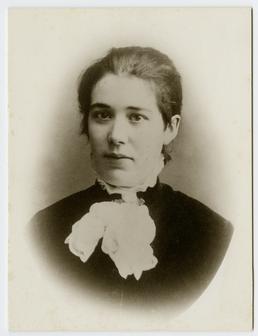
ID number: PG/6693
A key figure in the cultural revival of the Isle of Man
Instrumental in preserving and promoting the Manx Language and folklore. Involved in the Pan-Celtic movement, contributing to linguistic research, representing the Isle of Man at the Pan-Celtic Congress and developing the Anglo-Manx dialect.
Sophia Morrison was a pioneering Manx cultural revivalist, author, and folklorist, best known for her influential work in preserving and promoting the Manx language and heritage. Born in Peel, Isle of Man, she became fluent in Manx and several other languages, and was deeply involved in the Island’s cultural life from an early age.
A founding member and long-serving honorary secretary of Yn Cheshaght Ghailckagh (Manx Language Society), Sophia Morrison was instrumental in establishing Manx language classes and pioneering teaching aids. She played a vital role in the regeneration of Manx Gaelic, introducing it into schools and recording early phonograph reels of Manx speech and music.
She represented the Isle of Man at the 1901 Pan-Celtic Congress in Dublin and was a key advocate for the revival of Celtic languages and culture. As editor and funder of the influential Mannin journal (1913–1917), she provided a platform for Manx nationalism and cultural expression.
Author of the celebrated ‘Manx Fairy Tales’ (1911), a collection of stories gathered from local tradition, Sophia Morrison co-authored ‘Manx Proverbs and Sayings’ (1905) and contributed to the development of the Anglo-Manx dialect and supported the publication of ‘A Vocabulary of the Anglo-Manx Dialect’. As editor and funder of the influential Mannin journal (1913–1917), she provided a platform for Manx nationalism and cultural expression.
As well as literary publications, Sophia Morrison served as Vice-President of the Isle of Man Natural History and Antiquarian Society and was active in promoting Manx culture through events and educational initiatives.
Sophia Morrison’s legacy endures through her writings, her role in the Manx cultural revival, and the ongoing Sophia Morrison Award, which celebrates young achievers in Manx language studies. Her life and work are commemorated in the Sophia Morrison Reference Room at the Ward Library in Peel and through exhibitions and events marking her contributions to Manx heritage.
Jean Thornton-Duesbery (1907-1997)
A nurse, magistrate, Guides leader and a politician who spent her life protecting children and serving her community.
Jean Constance Catherine Thornton-Duesbery was born in London on 25th July 1907, to Charles Leonard and Ethel Nixon Thornton Duesbery. She moved to the Isle of Man in 1925 when her father became Bishop of Sodor and Man. Though she returned to London after his death, her connection to the Island remained strong throughout her life.
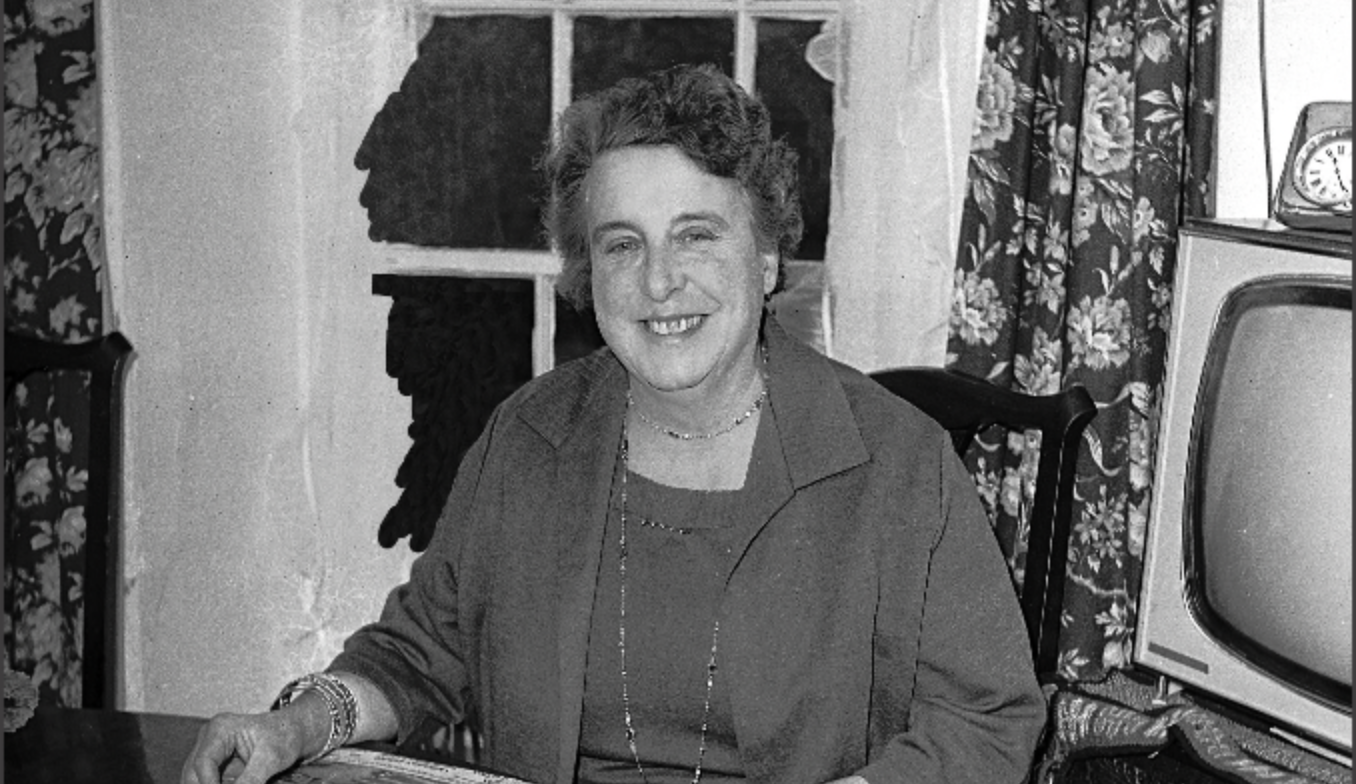
Jean trained as a nurse and midwife at Queen Charlotte's Hospital, qualifying in 1931. She worked in East London and later served as a school nurse in Jerusalem from 1933 to 1939. With the outbreak of World War II, she returned to the Isle of Man, settling in Maughold.
Her public service career began with her election to the Isle of Man Education Authority in 1946, eventually becoming its chairman. She was appointed a Justice of the Peace in 1956 and entered politics in 1966 as a Member of the House of Keys for Garff. Over the next decade, she served on numerous boards and committees.
Jean was also deeply involved in Girlguiding, leading local units and bequeathing land at Maughold on the Laxey to Ramsey Coast Road known as the Thornton-Duesbury Wood for the movement’s use.
Her legacy is marked by a strong sense of duty, humour, and commitment to public welfare. She passed away in 1997 and is buried in Kirk Michael Churchyard.
A lifelong servant of children and community
M. L. Wood (1839-1925)
Organist, educator, reformer, and founder of The Guild who was Manx in heart and spirit, leaving an enduring legacy in the Island's music and cultural life.
Miss Mary Louisa Wood – universally remembered as the ‘Mother of Manx Music’ – was a defining figure in the cultural development of the Isle of Man during the late nineteenth and early twentieth centuries. Born in London in 1839, she moved permanently to the Island in 1857, where she dedicated her long life to musical, educational, ecclesiastical and philanthropic service.
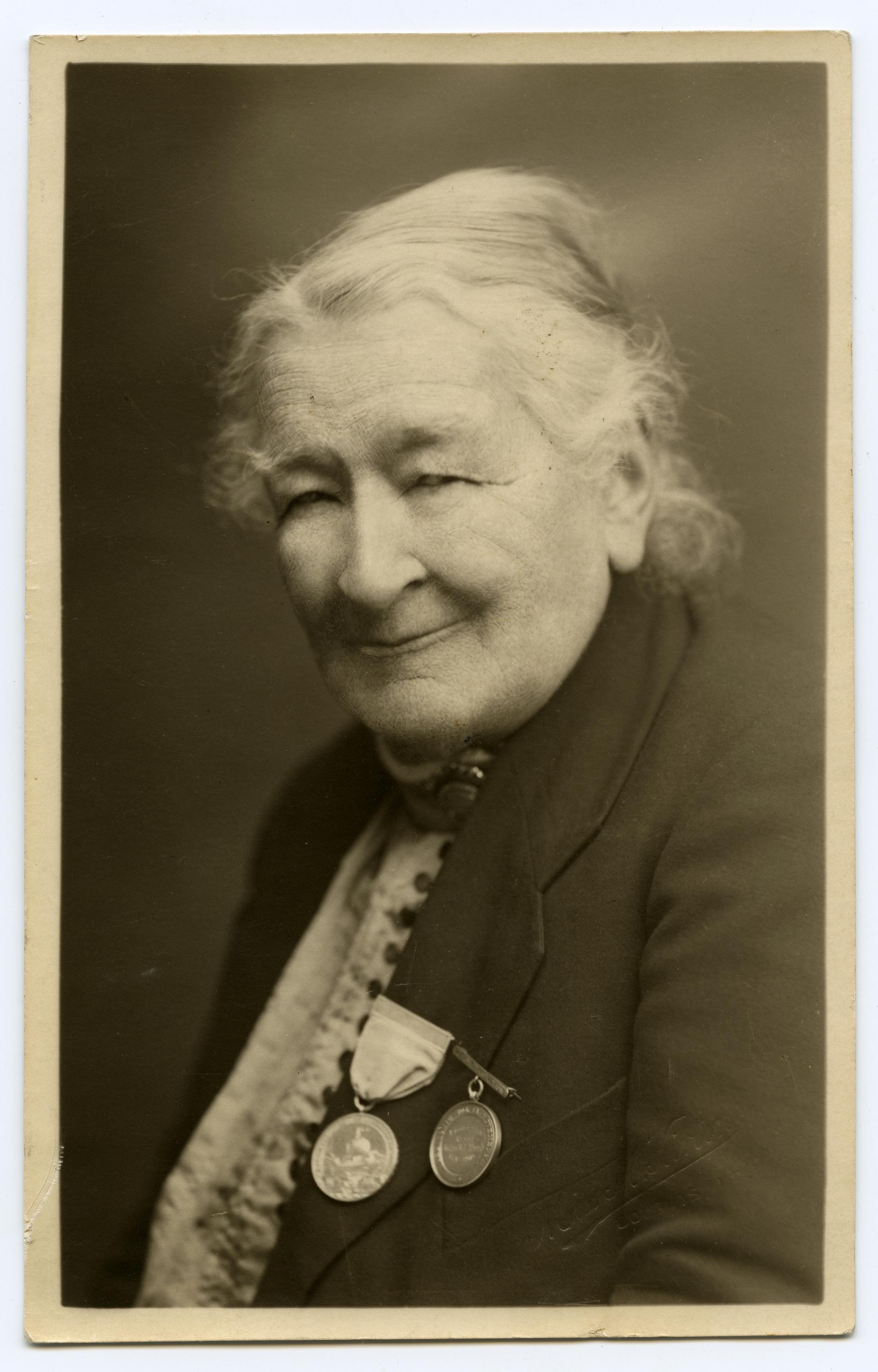
Although not Manx by birth, M. L. Wood (as she was always known) immersed herself deeply in Manx identity, becoming a central force behind the revival, preservation and celebration of Manx musical heritage. She founded the Isle of Man Fine Arts and Industrial Guild – today known as The Manx Music Festival or simply as ‘The Guild’ – which remains one of the Island’s most significant cultural institutions. The Guild still remembers its founder by awarding the M. L. Wood Scholarship to the most promising young musicians in the instrumental classes. She also championed graded music examinations, advocated for music education in schools, and promoted the tonic sol-fa method to improve standards of sight‑singing and musicianship across the Island.
Miss Wood’s personal character was described as both warmly engaging and quietly formidable – remembered for her smiles and bows, yet also for the resolute seriousness with which she approached the advancement of Manx music. Her life was touched by hardship: her mother was widowed, and her brother died after contracting fever while practising medicine in Ramsey Hospital. She lived in Douglas at 1 Osborne Terrace, sharing her home with fellow musician Annette Valentine Wood. She never married, devoting her life entirely to service, music, and Manx cultural life.
A gifted organist and conductor, she studied in London under Edmund Hart Turpin and later earned the Associate of the Royal College of Organists (A.R.C.O.) qualification. Her many concerts supported charitable causes including the Hospital, Industrial Home, Coal Fund and Ladies’ Soup Dispensary – performances frequently praised by the Island’s press and well-attended by civic and parliamentary leaders.
Miss Wood also championed women’s rights, including women’s suffrage, and she faced gender prejudice directly – most notably when she was dismissed as organist of St Thomas’ Church solely on account of being a woman. Public opposition to her removal testified to the respect she had earned and helped prompt wider reflection on women’s roles in church music. Her influence extended into liturgical reform, elevating church music through trained choirs, systematic vocal instruction, and the introduction of structured psalm‑singing. Her arrangements and compositions, including ‘The Bells of Old Kirk Braddan’, enriched both sacred and secular repertoires and helped formalise Manx folk melodies for concert and church use.
Despite her many achievements, Miss Wood attributed her musical work to her Christian convictions rather than personal ambition. The Lord Bishop, speaking at her memorial service, recalled that she was “happiest when she knelt with the other worshippers… and offered thanks to God.”[1] She died peacefully at home on 4 January 1925 and is buried in Onchan Churchyard.
As the Peel City Guardian wrote, though not Manx-born, “Miss Wood was essentially Manx in sentiment, and her compositions are influenced by that sentiment.”[2]
Mother of Manx music
[1] Mona’s Herald, ‘Mother of Manx Music’, 4 November 1925, last accessed 13 May 2026, https://www.imuseum.im/Olive/APA/IsleofMan/SharedView.Article.aspx?href=MNH%2F1925%2F11%2F04&id=Ar00809&sk=35F89914&viewMode=image
[2] Manx Notes 191, ‘Kiaull Manninagh Jiu’, last accessed 13 May 2026, https://chiollaghbooks.com/manxnotes/MN191.pdf