
Legislative Council
Business before the Legislative Council
The business of the Legislative Council is set out in an Order Paper, decisions are recorded in the Votes and Proceedings and the full record of everything said is set out in the Official Report - Hansard. Upcoming and recent Order Papers, Votes and Proceedings and Hansard for Legislative Council can be accessed directly from the lists below.
Order Papers
Hansards
Votes and Proceedings
The Presiding Officer of the Legislative Council
The President of Tynwald is elected by and from Tynwald, serving for a period of five years. The President of Tynwald presides ex officio over the Legislative Council.
The President, as the presiding officer, usually remains impartial but in the case of a tied vote on a division does have a casting vote. The President is responsible for controlling the procedure of the Council and for the authoritative interpretation of its Standing Orders. He or she also has the duty of nominating the Member of the Council to be responsible for promoting each Bill which is to come before Council.
If the President is absent from any sitting, the Council elects a Member as acting President of the Council.
More information about the role of the President in the Legislative Council can be found here.
Legislative Council Chamber

The Legislative Council has its origins in the King of Man's Council of personal advisers. The Lord's Council, as it became, met in Castletown in that part of Castle Rushen which was adjacent to the present Court House. Major alterations to the Castle, particularly in the nineteenth century, now make its exact location uncertain.
From the 1860s, Governors experienced various difficulties with their personal accommodation and the practice developed of the Council attending on the Governor at places convenient to his residence. Often this was in the Court House in Douglas, although various attempts were made by the Deemsters to re-establish Castletown as the permanent venue for the sittings. When the present building was acquired from the Bank of Mona in 1879, the Legislative Council was accommodated on the floor above the Keys Chamber.
The Legislative Council Chamber has been remarkably little altered since it has been occupied by the Council. The Chamber is panelled in oak and the stained glass window in the north wall contains the Manx arms and the armorial bearings of the English Crown. Among the framed photographs which hang in the Chamber are photographs of all past Presidents of the Legislative Council who have presided over the Council in the present Chamber. As the Lieutenant Governor presided ex officio over the Council until 1980, they include photographs of all the Lieutenant Governors from Lord Loch, who was Lieutenant Governor from 1863 to 1882, to Rear Admiral Sir Nigel Cecil, who was appointed in 1980. In 1980, by virtue of the Constitution (Legislative Council) Amendment Act 1980, the Council elected a President from their own members. The photographs of the elected Presidents, the Hon J A C K Nivison CBE and R J G Anderson, also hang in the Chamber.
The Council sit at a semi-circular table in the centre of which is the President's Chair, which was presented by the Parliament of the Commonwealth of Australia in celebration of the millennium of Tynwald. To the right and left of the President sit, respectively, the Lord Bishop of Sodor and Man and HM Attorney General for the Isle of Man. The remaining members are seated in order of seniority, the more recently elected members sitting furthest from the President.
Members of the Legislative Council
 Tanya August-PhillipsLegislative Council
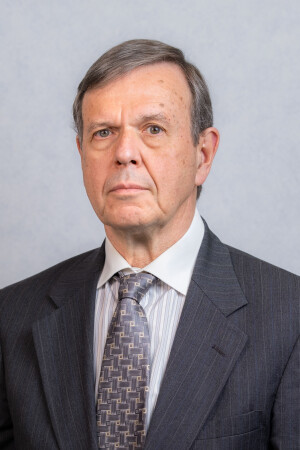 Gary ClueitLegislative Council
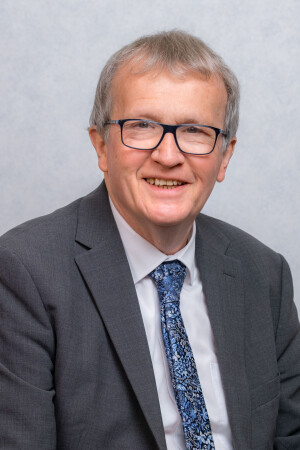 Paul CraineLegislative Council
 Diane KelseyLegislative Council
 Dawn KinnishLegislative Council
 Rob MercerLegislative Council
 Kirstie MorphetLegislative Council
 The Lord Bishop of Sodor and ManLegislative Council
 Peter ReidLegislative Council
 Walter Wannenburgh KCLegislative Council
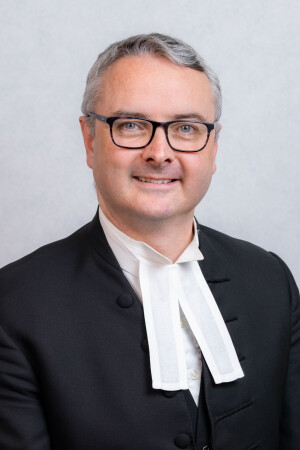 The Hon Juan WattersonLegislative Council